
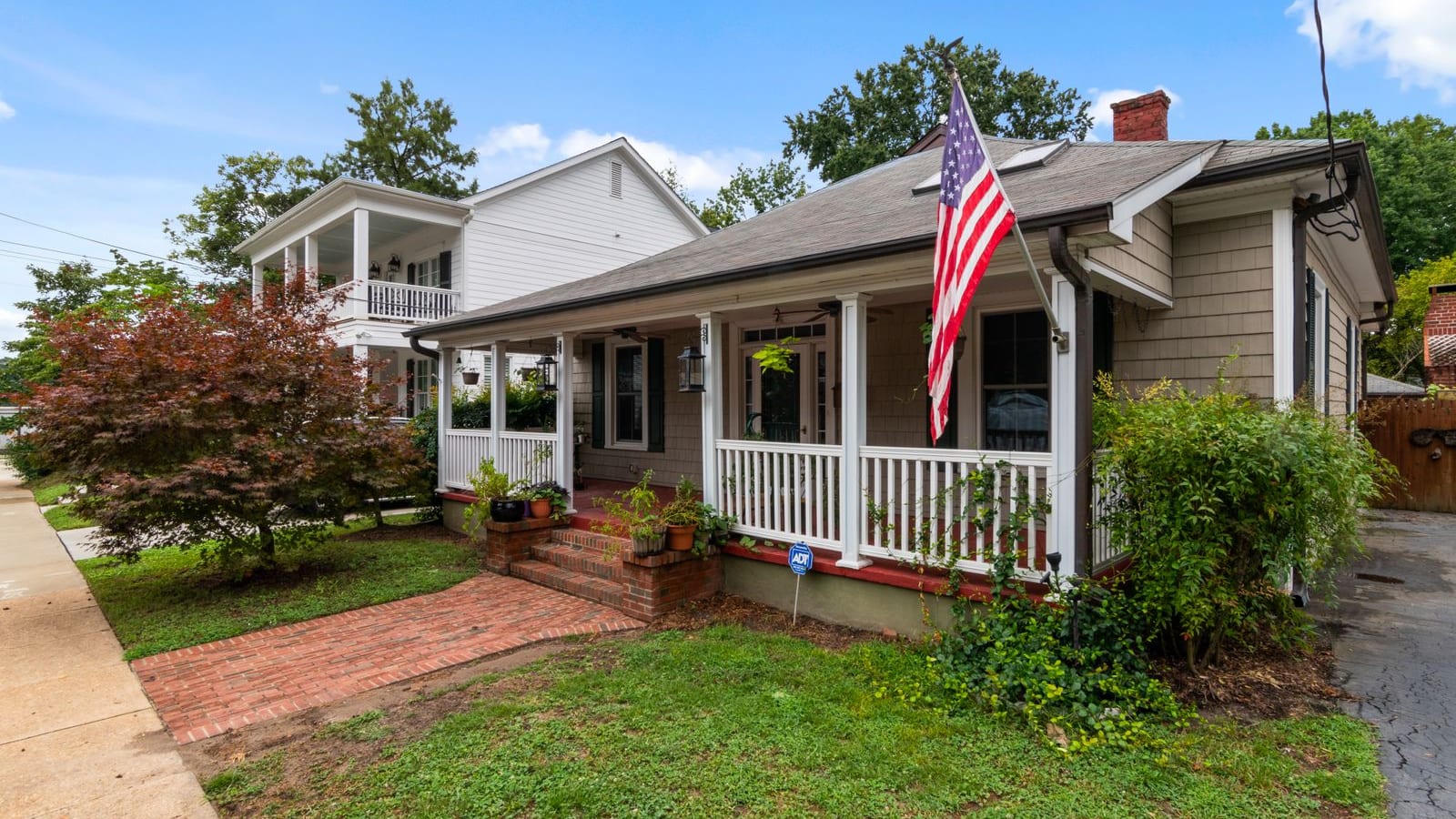
The Florida homestead exemption is the most valuable piece of paperwork a military family signs after the closing table. For 2026 it removes up to $51,411 from your home's assessed value, caps how fast that value can climb, and opens the door to veteran exemptions that can take a property tax bill all the way to zero. I am a retired USAF Combat Systems Officer and a Realtor at Levin Rinke Realty in Pensacola, and I still watch transferred families leave this money on the table every single year. This post is the field-guide version: the 2026 numbers, the March 1 deadline, what happens when you PCS out and rent the house, and the disability exemptions, with links to the deep guides where you need the fine print.
How much does the homestead exemption save on a Pensacola home in 2026?
Roughly $460 to $730 per year on a $350,000 home, depending on which side of the county and city lines you sit, by my math at the 2025 adopted millage rates. The exemption removes up to $51,411 from your assessed value in 2026: the first $25,000 applies to every taxing authority, and the second slice, worth up to $26,411, applies to assessed value above $50,000 but does not touch school taxes.
That second number used to be a flat $25,000. Amendment 5, approved by Florida voters in November 2024, indexes it to inflation each year, which is why it reads $26,411 for the 2026 tax year (Florida property appraiser publications, 2026). You do nothing to claim the adjustment; it happens automatically once your exemption is on file.
Here is what the dollars look like locally. Millage varies street by street with fire districts and MSTUs, so treat these as clearly labeled ballparks, not quotes:
| Location | 2025 total millage | Approx. first-year savings, $350K home |
|---|---|---|
| Unincorporated Santa Rosa County | ~12.1 mills (derived from FY2025 adopted budget) | ~$460/year |
| Unincorporated Escambia County | 13.40 mills (Escambia Tax Collector, 2025) | ~$548/year |
| City of Pensacola | 17.01 mills (Escambia Tax Collector, 2025) | ~$733/year |
The savings math behind the table: $25,000 times the full millage, plus $26,411 times the non-school millage. Notice the spread. The same house pays meaningfully different taxes inside Pensacola city limits than in unincorporated Escambia or across the line in Santa Rosa. When I run buyer budgets for families shopping the live MLS search, the tax line can move by hundreds of dollars between two houses with identical list prices. The exemption is the same everywhere; the millage is not, and that is a distinction most out-of-state buyers have never had to make.
What is the March 1 deadline, and how do I file in Escambia, Santa Rosa, or Okaloosa?
You must own and occupy the home as your permanent residence on January 1, then file with your county property appraiser by March 1 of that tax year. Close on a house in 2026 and your first eligible year is 2027, with a deadline of March 1, 2027. All three local counties accept applications online, and none of this happens automatically at closing.
County by county:
- Escambia County (Pensacola, NAS Pensacola, Corry Station, Saufley Field): file online through the Escambia County Property Appraiser at escpa.org.
- Santa Rosa County (Pace, Milton, Navarre, Gulf Breeze, NAS Whiting Field): file through the Exemptions page at srcpa.gov.
- Okaloosa County (Eglin AFB, Hurlburt Field, Crestview, Niceville): search your parcel at okaloosapa.com and click Apply for Homestead Exemption on the parcel summary page.
Expect to show proof that Florida is home: the recorded deed, a Florida driver's license or ID, Florida vehicle registration or voter registration, and Social Security numbers for all owners. Each appraiser publishes its exact checklist, so verify before you sit down to file. One flag for military filers: Florida homestead is a claim of permanent residence, so you cannot hold it while claiming a residency-based tax break in another state. If your paperwork still points to your last duty station's state, clean that up first.
My own routine says everything about how easy this is: every buyer I close gets the county filing link in my post-closing email, because the online application takes about fifteen minutes and is worth hundreds of dollars a year, every year you own the home. If you bought with a VA loan, the occupancy you already certified lines up naturally with the homestead requirement.
How does the Save Our Homes cap work, and why is it worth more than the exemption?
Once your homestead is granted, Save Our Homes caps your assessed value growth at 3% per year or the CPI change, whichever is lower. For 2026 the cap is 2.7% (Florida Department of Revenue, Save Our Homes, revised January 2026). In a rising market, that compounding cap eventually saves you more than the $51,411 exemption itself, because it keeps your tax base frozen near what you paid while market values run.
Two consequences to burn in. First, the cap protects incumbents, not buyers: when a home sells, the assessed value resets to market on the next January 1. The tax figure on the listing sheet shows what the seller paid after years of capped growth, not what you will pay. Every August, when the TRIM (Truth in Millage) notices hit mailboxes, I get calls from buyers who closed the year before wondering why their bill jumped past the number they saw on the MLS. Budget from a reset assessment, the same way you should budget from a real quote for Florida homeowners insurance instead of the seller's old premium.
Second, the cap savings travel. Sell a homesteaded Florida home and you can carry up to $500,000 of the difference between market and assessed value to your next Florida homestead, as long as you establish the new one within three tax years (Form DR-501T, filed with the new homestead application). For military careerists who buy here, PCS away, and come back, portability is real money. Before you decide whether to sell or hold, get an actual number on your equity from the home valuation page.
Can I keep my Florida homestead exemption when I PCS and rent the house out?
Yes, if you are on active duty. Renting out a homestead normally abandons the exemption under Florida Statute 196.061, but the same statute carves out servicemembers: rental does not constitute abandonment for an active-duty member, and valid military transfer orders are sufficient to maintain your permanent residence. It is one of the most military-friendly property tax rules in the country, and it changes the whole rent-versus-sell calculation.
Think about what that means in practice. You PCS from Pensacola to Norfolk, a tenant covers the mortgage, and your exemption and Save Our Homes cap keep running as if you never left. Ten years later the house carries a capped assessment while the neighbor who bought last year pays taxes on full market value. The conditions: you stay on active duty, Florida remains your permanent residence, and you do not claim homestead or an equivalent benefit anywhere else. Some property appraisers ask for a copy of orders or periodic verification, so confirm your county's process before you assume anything.
Whether keeping the house is actually the right move is a different question, and I wrote the rent-or-sell PCS guide to answer it with real numbers. If you do keep it, the rental property management guide covers running a Pensacola rental from three time zones away, and the PCS tax guide covers the federal side of the move itself.
Not sure which exemptions your situation qualifies for?
Tell me where you are in the process: house hunting, just closed, holding orders, or carrying a VA rating. I will point you at the exemptions that apply and the county forms that claim them. No pressure, no spam, no obligation.
What property tax exemptions do disabled veterans get in Florida?
Three tiers, all stacking on top of the standard homestead exemption. A service-connected rating of 10% or higher earns an extra $5,000 off assessed value (F.S. 196.24). A 100% permanent and total rating eliminates property tax on the homestead entirely (F.S. 196.081). And veterans 65 and older with a combat-related disability receive a discount equal to their rating percentage (F.S. 196.082).
Honest numbers on each. The $5,000 exemption is modest: at roughly 13.4 mills it saves about $67 a year, which is a nice dinner, not a windfall, but it takes one form and zero maintenance. The 100% P&T exemption is the life-changer: on a $350,000 home it is worth roughly $4,690 a year in unincorporated Escambia and closer to $5,950 inside Pensacola city limits, by my math at 2025 millage rates. There is no income test and no means test. The exemption can also continue for a surviving spouse, and under F.S. 196.081 it can even transfer to a new Florida residence in certain circumstances.
The mistake I see as an MRP-designated agent working with rated veterans: filing homestead and stopping there. The property appraiser does not add the veteran exemption for you; it is a separate application with your VA rating letter attached. I walk through every tier, the documentation, and the surviving-spouse rules in the VA disability property tax guide, and the full state benefits stack lives in the Florida disabled veteran benefits guide.
What is the deployed servicemember exemption under F.S. 196.173?
If you were deployed during the preceding calendar year outside the continental United States, Alaska, or Hawaii in support of a military operation designated by the Florida Legislature, you receive an additional exemption equal to the share of the year you were deployed. Gone 183 days in 2025? Just over 50% of your home's 2026 taxable value comes off the books. Apply on Form DR-501M with your county property appraiser by March 1, with documentation showing the deployment dates.
The catch is the word designated. The Legislature maintains a specific list of qualifying operations in the statute, and it changes over time, so a workup, a training detachment, or an unlisted deployment may not qualify even if you spent six months away from your family. Around Pensacola's training wings, most instructor and student tours will not generate qualifying time, and I would rather tell you that plainly than let you budget for an exemption you will not get. If you deployed last year, pull your orders, check the operation name against the current statute list, and file; the appraiser must rule on the application, not you.
What homestead mistakes do military families actually make?
The same handful, over and over. Every one of these is preventable in under an hour:
- Missing March 1 or assuming it is automatic. Nothing files itself. Closing attorneys do not file it, lenders do not file it, and the county does not know your intent until you tell them.
- Keeping the old state's exemption. Claiming Florida homestead while holding a residency-based break elsewhere is the double-dip that triggers F.S. 196.161: up to 10 years of back taxes, a 50% penalty per year, and 15% annual interest, secured by a lien. Drop the old exemption when you file the new one.
- Budgeting off the seller's tax bill. Save Our Homes resets at sale. If you are sizing a mortgage payment against your BAH, use a reset assessment at current millage, not the listing sheet; the 2026 BAH rates page has the housing-allowance side of that math.
- Never filing the veteran add-ons. Homestead and the disability exemptions are separate applications. A 100% P&T veteran who only filed homestead is donating thousands a year to the county.
- Forgetting portability. Buying your second Florida home and skipping Form DR-501T throws away accumulated cap savings you legally own.
- Letting the exemption die at retirement. The F.S. 196.061 rental shield applies while you serve. Retire or separate while a tenant occupies the house and the exemption and cap can fall off. Plan the sale, the move-back, or the tax hit before your final out-processing date, not after.
Should I file homestead if I will probably PCS again in two or three years?
Yes, every time. The math is lopsided: fifteen minutes of online filing buys $460 to $730 a year at Pensacola-area millage, so even a two-tax-year ownership window returns roughly $900 to $1,500. The Save Our Homes cap starts compounding immediately, there is no penalty for selling early, and if orders send you away, the active-duty rental exception keeps the whole structure alive while a tenant pays the mortgage.
I have sat across from plenty of families at NAS Pensacola, Whiting Field, and Hurlburt who almost skipped filing because "we're only here for a tour." Two years later, the ones who filed had lower bills and a capped assessment; the ones who did not had donated a car payment to the county. If orders to the Gulf Coast are already in hand, the complete PCS guide covers the timeline from orders to keys, and I am glad to talk through your specific dates.
Sources and References
- Florida Department of Revenue: Property Tax Exemptions
- Florida DOR: Save Our Homes brochure (revised January 2026)
- Florida DOR PT-109: Property Tax Exemptions for Military
- Florida DOR Form DR-501M: Deployed Military Exemption
- Florida Statutes ch. 196: 196.031, 196.061, 196.081, 196.082, 196.161, 196.173, 196.24 (flsenate.gov)
- Escambia County Property Appraiser
- Escambia County Tax Collector: 2025 millage rate detail
- Santa Rosa County Property Appraiser: Exemptions
- Santa Rosa County: FY2025 adopted budget and millage announcement
- Okaloosa County Property Appraiser
Questions about your situation?
Call or text (850) 266-5005 | Book a 15-minute call
Frequently Asked Questions
How much is the Florida homestead exemption in 2026?
Up to $51,411 off your assessed value. The first $25,000 applies to all property taxes, including school levies. The second slice, worth up to $26,411 in 2026, applies to assessed value above $50,000 but does not reduce school taxes. That second amount is now indexed to inflation each year under Amendment 5, approved by Florida voters in November 2024.
What is the deadline to file for homestead exemption in Florida?
March 1 of the tax year, and you must have owned and occupied the home as your permanent residence on January 1 of that year. If you close on a home in 2026, your first eligible tax year is 2027 and your deadline is March 1, 2027. When March 1 falls on a weekend, county offices roll it to the next business day, but do not cut it that close.
Can I keep my Florida homestead exemption if I PCS and rent out my house?
Yes. Florida Statute 196.061 says renting a homestead normally abandons the exemption, but it carves out active-duty servicemembers: military transfer orders are sufficient to maintain your permanent residence, so you can rent the home out while stationed elsewhere and keep both the exemption and the Save Our Homes cap. See the rent-or-sell guide for how this changes the PCS math.
Do 100% disabled veterans pay property taxes in Florida?
Not on their homestead. Under Florida Statute 196.081, an honorably discharged veteran with a 100% permanent and total service-connected disability rating pays zero property tax on their primary residence, with no income or means test. The exemption can continue for a surviving spouse under conditions in the same statute.
What is the Save Our Homes cap?
Once your homestead exemption is in place, your assessed value can rise no more than 3% per year or the CPI change, whichever is lower. For 2026 the cap is 2.7% (Florida Department of Revenue). The cap resets when a home sells, so a buyer's first-year tax bill is usually higher than the seller's old bill.
Can I transfer my Save Our Homes savings to a new Florida home?
Yes, this is called portability. You can move up to $500,000 of the difference between your old home's market and assessed values to a new Florida homestead, as long as you establish the new homestead within three tax years of abandoning the old one. File Form DR-501T with your new homestead application.
What is the deployed military property tax exemption in Florida?
Florida Statute 196.173 grants an additional exemption to servicemembers who deployed during the preceding calendar year outside the continental U.S., Alaska, or Hawaii in support of operations designated by the Florida Legislature. The exemption equals the percentage of the year you were deployed. Apply on Form DR-501M by March 1.
Does the Florida homestead exemption renew automatically each year?
Yes, it renews automatically once granted, and counties mail an annual receipt or renewal notice. The obligation runs the other way: you must notify the property appraiser if the property stops qualifying. Improperly claimed exemptions can be back-taxed up to 10 years with a 50% penalty per year plus 15% annual interest under Florida Statute 196.161.